 |
| Trying to keep awake was the problem! |
Saturday, 18 January 2014



Tuesday, 14 January 2014
The Adventures of Miss Rosemary La Page.
 |
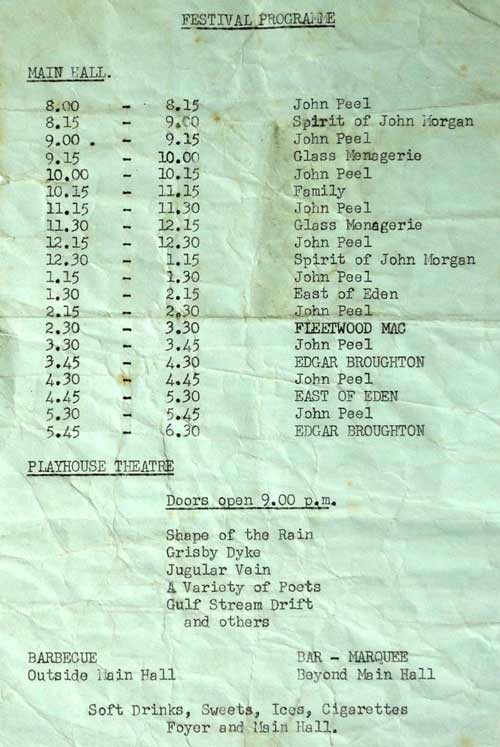
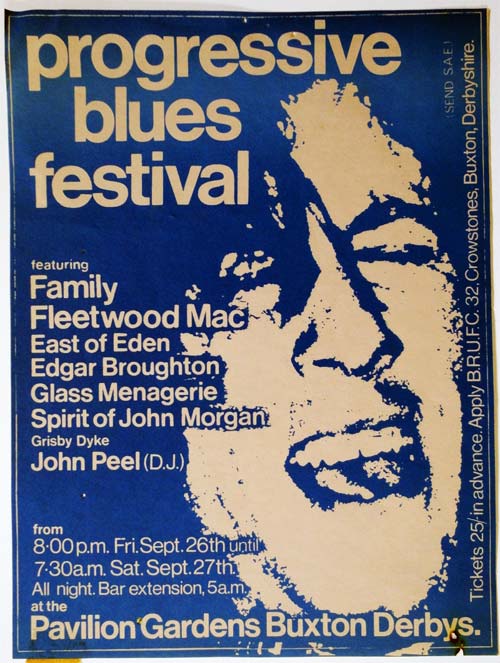
| Grisby Dyke were a band that played around the Manchester Area and often played in Buxton, Derbyshire. |
Fragment from Shagrat Records - Heroes By Henry Ayrton.
During the autumn, winter and spring months of 1969 and 70, as a burgeoning 'freak' and underground music fan, I was going to a lot of gigs in the Blackpool, Preston, Lancaster, Manchester area.
One band I saw a lot on my travels around then was Urban Gorilla - also variously known as The Stark Electric Blues Band, very briefly Lanchester County (an unofficial name soon replaced with Urbane Gorilla - note the spelling - it was meant to be part of a joke, but it got a lot of people confused) and finally Urban Gorilla.
I saw them regularly in the Great Hall at Lancaster University and further afield including an amazing gig at the Pleasure Beach Casino on Wednesday 1st April 1970 where they supported the fast rising Black Sabbath and local heroes, Grisby Dyke - that night was also my first encounter with Stackwaddy but that's another story!
One band I saw a lot on my travels around then was Urban Gorilla - also variously known as The Stark Electric Blues Band, very briefly Lanchester County (an unofficial name soon replaced with Urbane Gorilla - note the spelling - it was meant to be part of a joke, but it got a lot of people confused) and finally Urban Gorilla.
I saw them regularly in the Great Hall at Lancaster University and further afield including an amazing gig at the Pleasure Beach Casino on Wednesday 1st April 1970 where they supported the fast rising Black Sabbath and local heroes, Grisby Dyke - that night was also my first encounter with Stackwaddy but that's another story!
Sunday, 12 January 2014
Skirr Cottage Journal 2.
By the middle of our first
summer living in the cottage, I decided that I would like to give the cottage a
name, honour it so to speak with some originality. The family agreed. The name that sprang to mind
was not actually original at all, but I would imagine is still pretty unique to
this day. Perhaps it is a little sentimental, but I saw it as putting our 'mark'
on the cottage - at least while we were living there. Having heard a tawny owl several times in the garden (its favoured spot is the top of a telegraph pole or the ash) and beyond the fields in the woods, and spotted a short-eared owl in the far
fields below the Edge, my mind was made up. The name I settled on was Skirr
Cottage, after Henry Williamson's first cottage in the North Devon village of Georgeham South London terrace, and no
doubt the traffic noise. Williamson had visited the area before the Great War,
in which he fought, and remembering the still largely unchanged rural way of
life, the beautiful landscape and the peace and quiet, decided to become a
writer and make Georgeham his home, renting a humble labourer's dwelling known
as Skirr Cottage for £5 a year. The name 'Skirr' is derived from the noise made
by the barn owls that had nested in the thatch for generations.
His prize winning book about
an otter, the early drafts written in Skirr Cottage, won him great fame, and he
went on to write some fifty books apart from 'Tarka'. Williamson may have had
his faults, and as a result has been sadly ignored by the public and the
establishment, but for me his books have always, and always will be magical,
painting as they do such vivid pictures of the old rural way of life.
We have yet to see a
barn owl in the vicinity of the cottage but we live
in hope.
in hope.
Thursday, 9 January 2014
Skirr Cottage Journal.
Welcome to the Skirr Cottage Journal.
This is the first of what I hope will become a regular nature diary
feature. The ‘rural rides’ will take in the local area around my home and other
locations in the Peak. I can never hope to reach the dizzy literate heights of
my namesake Kenneth ‘Allsop’, but I will follow tentatively in his shadow and
in awe of his great insight into nature and the countryside:
“In the short term,
man seems to have it taped, to have gained dominance over the planet; in the
longer term I think we may be the losers … Because central Government and local
authorities betray the trust vested in them. Because landowners agree to it.
“Money talks. Beauty is
voiceless…”
Kenneth Allsop. In The Country. 1972.
We moved into our new home - a
cottage on the out-skirts of Buxton - on the 8th March 1996. Moving house is of
course a traumatic experience for anyone, and we were no exception to the rule.
The garden of course proved invaluable to us all, it being the main factor in
'pulling up stumps' in the first place. Being lovers of the local area and all
‘wild places’, we had longed to create a wildlife garden which help in some
small way to preserve the wild creatures and the environmental biodiversity of
the area.
We soon greeted the silence: it is so quiet
and peaceful here and at night and it goes quite 'dark', something that came as
a surprise. We then had to get used to
the cottage's 'whims'; it creaks rather like an old galleon at sea. Such bumps
and stirrings seemed to be amplified by the lack of heavy traffic noise, such
as we were bombarded with before. The cottage is far from remote being on a
long road full of other fare more modern dwellings built sporadically around
the 1930’s and 40’s. The semi-detached cottage we inhabit was built around 1850
as far as we can determine, and was possibly a forest workers cottage built by
the Chatsworth Estate.
The garden wall borders on
to open pasture (the back field), while a little to the west, stark trees line
the high edge of Burbage Moor, an area known to us merely as the Edge. Here we
now are, for better or worse - on the edge of the wild. We have been
privileged to observe certain animals that are personal totems in my Celtic
imaginings - hares in the backfield and up on the Edge. Sometimes we watch spellbound as one of
the beautiful creatures creeps right up under our garden wall. They seem to me
to be so primeval and one of the reasons why I spend so much of my time watching and studying them.
Saturday, 4 January 2014


Subscribe to:
Comments (Atom)