Monday, 29 September 2014

Richard Mabey: in defence of nature writing

Steven Poole criticised nature writers – and their readers – for whimsy and for idealising the non-human world. He was wrong.

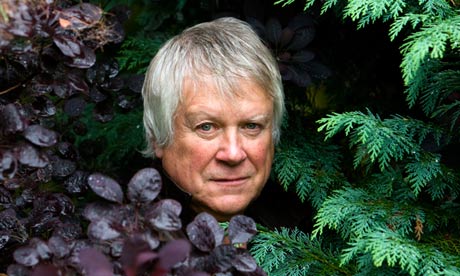
Richard Mabey: Nature writers ‘embrace other beings’ as part of their narrative. Photograph: Murdo Macleod for the Guardian
Not since John Clare lambasted Keats for metropolitan sentimentality has there been such an unwarranted attack on the integrity of nature writers. In a letter written in 1830, nine years after Keats's death, the poet of the fields accused the cockney Romantic of portraying "nature as she … appeared in his fancys & not as he would have described her if he had witnessed the things he describes".
Steven Poole's recent essay in Review echoed Clare's sour jibe. What Poole sees, when he considers "recent nature writing" and its readership, is urban whimsy, pastoral nostalgia, "a solidly bourgeois form of escapism". He singles out half a dozen writers of different kinds, but his piece seems to be aimed at all of us who have tried to explore the complex relationships between humans and the natural world. Searchers in the forest are fanciful elitists, he suggests; their use of language is even on occasion tainted with fascism.
I accept that somewhere in Poole's essay there is a legitimate questioning of the way that nature has been commercialised and commodified, as day-trip redemption, off-prescription Prozac. But that isn't what is memorable about his essay. I've worked in this area for 40 years, and though I am not personally incriminated, I feel insulted and traduced by it, and I know enough of the way this area of literary exploration has been evolving to raise a voice of complaint on behalf of my colleagues. Poole's phrases "recent nature writing" and "nature writers" amount to an indiscriminate homogenisation; current nature writing is the broadest of secular churches. Oliver Morton's engaging personal saunter through the world of photosynthesis, Eating the Sun, for example, might be more properly labelled imaginative science writing, just as Robert Macfarlane's literal wanderings in his masterpiece The Old Ways is really imaginative travel literature.
Yet there we all seem to be grouped as a kind of cult. Most of us prefer to think of ourselves just as writers, who simply wish to embrace a rather larger than usual cast of characters, the other beings and landscapes with which we share the planet – and to respect them as subjects not simply objects. But nature as active subject implies relationships, not simply objective descriptions (that's "natural history writing"), and the difficult work of marrying truth to one's emotional and imaginative responses with truth to an organism's own life.
All this, and the assumption that there is something close to "mind" in nature seems to be anathema to Poole. Perhaps he would accept "intelligence" instead. Let me give a couple of examples of what I mean. Today, a neighbour brought me a goldfinch's nest, whose foundation was a perfectly selected and fashioned circle of chicken wire. It wasn't strong enough to hold the nest up in a gale but it was a great idea. And all this last hot week the oaks have been putting out their pinkish lammas shoots, responses to foliage lost by predatory insects. If there is more predation the oaks will begin talking to each other through airborne pheromones, which increase the bitter tannins in their leaves.
Intelligence in nature is this deep-time, evolved capacity to adapt, to be creatively resilient. Which is why Tim Dee's insight from the forthcomingFour Fields, mocked by Poole, that "The fog was everywhere, but thickest on the fen, for that is the lowest, ground and the air knows it – the land has been underwater before" is more than a metaphor. It's a recognition of the appropriate, and therefore intelligent, behaviour of matter, and that landscapes have "memories" embedded in their structure that influence their present environs, their future destinies – and the humans that pass through them. If Poole has never experienced this, he needs to get out more.
Writing about this is difficult and skiddy work, prone to anthropomorphism. Fortunately there has been a strong strain of self-interrogation in much recent nature writing. About, for instance, the relation between human and natural creativity, given a huge boost by recent sonogram analysis of birdsong. We may know why birds sing, but what they sing, in bird-time and bird-pitch, is something else. "The loudest song means the fittest birds," is the kind of oafish verdict handed down on Springwatch. But what sound like simple single notes to our poor ears resolve at slow speed and transponded pitch into dense and kaleidoscopically shifting tone poems. Does that make birdsong music, or do we claim that category of organised noise purely for our self-conscious creations?
Attempts to move from human-centredness to more inclusive and empathetic points of view are philosophically and practically fraught, involving the biggest question of all, whether language (and therefore our writing) is complicit in humans' supposed alienation from nature. I fell into this trap myself, once portraying a barn owl hunting over a dusk hayfield as a symbol of the change from day to night, part feathered shuttle, part winged flail. It was an appropriation to suit my own poetic conceit, an insult to the delicacy of the real bird. Now I warm towards the concept of neighbourliness as a template with which to approach and write about our relations with our fellow organisms. It permits concern, shared circumstance, even love from afar, but demands no reciprocity.
The writing, not just its subject, is part of this neighbourly ecological bond. Jonathan Bate, in the UK's first indigenous work of eco-criticism The Song of the Earth wrote that "the dream of deep ecology will never be realised on earth, but our survival as a species may be dependent on our capacity to dream it in the work of our imagination."
This makes Poole's jibe that "nature writers do tend to whitewash the non-human world as a place of eternal sun-dappled peace and harmony" even more baffling. It's plain he has never read Kathleen Jamie's sombrely beautiful and unflinching pathology room meditation on mortality and nature's human predators in Sightlines.
To the extent that nature writing has a common spring, it is defiantly anti-pastoral. It emerged not out of a desire to return to some ruralist golden age, but to repudiate such fantasies – the tweeness of "country lifestyle" magazines, the soulless, technically obsessed imperiousness of natural history television, the belief that agriculture and its colonial embodiment, "the countryside") are unimpeachable sources of moral value. Hence the passion for the unfarmed wild, for the small, the particular and the local, and the affirmation that "new" nature writing was not new at all, but embedded in a long tradition. And though distant walking is currently the favoured mode to revelations about the self and the land, for much of the past two centuries it was rootedness, staying put, which was regarded as the key. The Rev Gilbert White, whose The Natural History of Selborne(1789) was the first work of literary nature writing, spent almost his whole life in that small Hampshire village. His one book was, for its time, a revolutionary exercise in modernism: non-fiction organised in the epistolary style of experimental 18th-century fiction, and daring to pay the same attention and respect to crickets as churchgoers. John Clare, whose anthems of solidarity to his fellow commoners of all species are another beacon, panicked when he was away from Helpston and "out of his knowledge". Ronald Blythe (no mean nature writer himself) has lauded Clare's "indigenous eye" and "his extraordinary ability to see furthest when the view was strictly limited".
The baton was taken up again after the second world war, and JA Baker, obsessively walking a small stretch of the Essex coast in a search of peregrine falcons, became the single most important inspiration of all who followed. The Peregrine reinvents the language of natural metaphor, and achieves the remarkable metamorphosis of man into predatory bird. Baker's contemporary. the TV journalist Kenneth Allsop, was the other improbable inspiration for some of us older scribes. His Sunday Times columns (which cost him his job) were full of incandescent anger and a style that was more New York jazz critic than polite, forelock-touching country diarist. And he introduced, in a prize-winning semi-fictional memoir (Adventure Lit their Star), the idea that the city was a place where rich engagements with nature were to be made.
The fact that there is now a flourishing strand of urban nature writing (for instance Paul Farley and Michael Symmons Roberts's Edgelands) is final proof of the absurdity of Poole's pastoral charge. As I write, in a blessedly hot July, that icon of the urban wild, the swift, has returned to its brick and concrete parishes. Where they went in the bleak weather of May and early June is as tantalising a mystery as their return is a benediction. ("They're back", Ted Hughes famously wrote, "which means the globe's still working … "). Now the dark scimitars will be scything across north London back-to-backs, screaming at knee level through the alleys of Granada, braving urban war zones across the Middle East. I once saw their flickering shapes crossing the commentator on a live TV broadcast of the shelling of Beirut, an unavoidable allegory about different ways of being alive. Finding words to bridge that divide between the otherness of nature – a swift sleeping on the wing 5,000ft up, and the life-choosing immediacy, the intimate familiarity of the rush of wings past the face – is what most nature writers are striving to do, not wallow in some vanished pastoral world.

Thursday, 25 September 2014

Viridios (Green Man.)

He does not speak or sleep
He is not invisible
But peers from a dappled web
Of green shadows.
He is the verdant one,
The primeval spellbinder
From beyond the stars,
Moulding our imagination,
Drawing us into Nature’s domain:
He is the gleam of light
On a sacred pool,
The sleepy drone of insects in a glade,
Sunlight on the silver birch,
The song of the stream
Over smooth stones.
He is the birdsong
Of the early dawn,
The dew-soaked spider’s web,
The stroke of a butterfly’s wing.
His are the muddy footprints
By the pool leading into the twilight,
The rustle in the hedgerow,
The last rays of pale light from a fading sun.
He is hope for the future,
And secret slumbering dream in the evergreen.
He does not sleep, but guards our faith in renewal
And waits patiently for the swallows song
And the first queen bee in the meadow.


Autumn Equinox: get the logs in for winter!

A sleepy Green Man.

Cool Jethro Tull poster.


Woodstock Poster. 1969!


Wednesday, 24 September 2014

Jethro Tull: Stand Up.

Still one of my most treasured albums and one of my favourite album covers.
Glenn Cornick back far right.

“Stand Up” included a unique cover design that features a pen and ink drawing of the band that imitates the look of a wood cut. When you opened the gatefold of the original US Reprise release, a pop-up of the band emerged. The artwork garnered the New Musical Express best album art award for 1969.

Glenn Cornick: musician. April 23rd 1947 – August 29th 2014.

Glenn Cornick played bass for Jethro Tull from its formation in 1967 to 1970
British bassist Glenn Cornick, a founding member of British rock band Jethro Tull, has died aged 67.
Cornick was the band's original bassist, playing from its inception in 1967 until he left three years later.
He had been suffering congestive heart failure and died at his home in Hilo, Hawaii, on Friday.
His son, Drew Cornick, said he had been receiving hospice care before he died. He said his father was brilliant and cantankerous until the day he died.
Jethro Tull frontman Ian Anderson also paid tribute to the British-born musician.
He said Cornick's contribution to the legendary band, renowned as one of the biggest bands of the prog rock era, had been "considerable".
Writing on the Jethro Tull website, Anderson said Cornick's broad knowledge of music helped establish the arrangements of the band's early material.
'Lively bravado'
"Glenn was a man of great bonhomie and ready to befriend anyone - especially fellow musicians," he said.
"Always cheerful, he brought to the early stage performances of Tull a lively bravado both as a personality and a musician."
Cornick had a firm footing in the origins of Jethro Tull - as far back to the mid-1960s when the band was known as the John Evan Band.
He played on the band's first three albums - This Was, Stand Up, and Benefit - as well as their biggest hit Living in the Past.
After leaving Jethro Tull, Cornick formed his own band, Wild Turkey, and was later a member of Paris with the American guitarist Bob Welch.
Cornick continued to attend Tull fan conventions where he would "join in with gusto to rekindle the musical moments of the early repertoire", said vocalist and flautist Anderson.
Cornick leaves behind his wife Brigitte Martinez-Cornick, his sons Drew and Alex Cornick, and his daughter Molly Cornick.

Tuesday, 16 September 2014

Fairfield Low in winter.

Fairfield Low in winter.This is a great distance shot of the copse on the Low.
 Photo by Simon Harrod
                                     
                                         Click Simon and see more.
                                                   

Fairfield Low. (The Gift).

Even in sunlight and crowned by blue sky
The hilltop seems remote and brooding:
The holder of astonishing secrets.
Among the sycamore and beech trees,
Shadows issue from its depth like left-over
Fragments of night.

On the green hillside, ancient spells
Appear to weave through the sun-dried meadows
Waving and rippling
Like a great hay coloured ocean.
A buzzard circles over-head, ploughing furrows
In the wispy clouds, its wings stretching out
To embrace the patchwork landscape;
The fossil walls, old straight tracks,
Lonely copses and sacred springs:
And the shadow of ancient groves.

Within the dapple shade of the copse
The cairn lays mute, reclaimed by nature;
Weather torn, plundered by history.
Yet for all its scars, it rests serene in its permanence.
Once a white shining beacon in the prehistoric landscape,
It called out to its god Etharun, the stag-horned Cernunnos
And fellow hilltop mounds; their ancient music
Now but a whisper through morning mist.

Beneath the dome of limestone, fossil pressing down on fossil,
A young girl reached out to embrace the after life;
A precious light blue bead clutched in a tiny hand:
A gift, a treasured gem to take on the final journey.
Now tree roots delve and snake into the tomb,
And what secrets remain find life in phloem and xylem
And rise to meet the rays of a familiar sun.


Wednesday, 10 September 2014

Great nature writer series: Richard Mabey.

Britain's secret countryside

Piranhas in Essex? Wild figs in Sheffield? Nearly 40 years after his landmark study of the wildlife thriving in our urban sprawl, Richard Mabey returns to our ‘unofficial countryside’

Richard Mabey,
Richard Mabey, Photo: REX FEATURES


When I was in my mid twenties, I got my first job in London. Well, Middlesex really, in the hinterland of peeling warehouses and run-down gravel pits round Heathrow. But it was a hot editorial job, at Penguin Books, and I felt as if I’d been beamed from my beechwood homeland direct to the pulsing, bohemian heart of Bloomsbury. These were the years of the Vietnam War and Paris uprisings and the nature I’d worshipped as a romantic teenager had been moved, discretely, into cold storage. There were other priorities.
But it seemed disinclined to play along with the backstage role I had given it. On the commute from the Chilterns to West Drayton, I had glimpses of fugitive water and resplendent waterbirds, glinting behind thickets of wayside scrub. Immense earthmovers scrunched like glaciers through prehistoric beds of flint and gravel. On a new roundabout near Uxbridge, they had piled up an artificial cliff-face of sand, and during that first summer a colony of opportunist sand martins raised their families in the shifting bank, darting nonchalantly between the JCBs and the traffic.
It was an even more fantastical scene at work. Our outpost of the Penguin empire was shaped like a slice of cake, and wedged between a canal and a main road. From one window, I gazed down on a flotsam-strewn channel edged by plants I’d never seen, from all quarters of the globe: Indian balsam, Japanese knotweed, Canadian fleabane. From another I could watch kestrels hovering above the rush-hour traffic. I tried to imagine the Escher-like complexity of the images on their retinas: towpath jungle, pub garden, concrete and metal stream, all in different focal planes.
In my lunch hours I found this rowdy, cosmopolitan luxuriance played out at a landscape scale. I wandered across derelict Victorian rubbish tips, through burgeoning woods of rampant Asian and Mediterranean shrubs — buddleia, bladder senna, Russian vine. I saw terns wafting over gravel pits, and great crested grebes nesting on floating car tyres. I was, for a while, emotionally lost.
This wasn’t supposed to happen. Inspired by the architectural critic Ian Nairn’s Outrage, we imagined our generation’s brave new world would sweep away the remnants of industrial dereliction, which were, by some deeply anthropomorphic assumption, deemed to be as inimical to nature as to humans. But here nature had a different agenda. This was nature as shape-shifter – canny, adaptive, surviving. In the climate of the times, it seemed almost insurrectionary.
I began to try and write about it, which led to a book called The Unofficial Countryside, and then a BBC film of the same name. I started going on urban safaris. I once did a two-day walk around the whole of inner London, beginning in the foxy barrows of Kensal Green Cemetery and passing through the phantasmagorical landscapes of Stratford Marsh. This was the most thrillingly scary environment I have ever been in: flooded towpaths through dank tunnels, tangled drifts of blood-tinted Danewort (stinking of butcher’s shops), the metallic calls of black redstarts ringing from a breaker’s yard full of red phone boxes. I began to learn something about the sassy ways in which nature adapted to our occupation (and disruption) of its ancestral territories, of the pigeons which travelled around London by tube train, of the migrant wading birds which used the sewage farm at the end of Heathrow’s main runway as a substitute mudflat, of the mice that had evolved thick fur to survive in refrigerated meat containers in the docks, of the 15ft-tall giant hogweed that was advancing into western London after escaping from the herbaceous beds of Buckingham Palace.
In the summer after the Blitz, there was weed-storm across London. The bomb sites were covered with a purple surf of rosebay willow herb (unfamiliar then but quickly tagged “bombweed”). Damp-loving ferns carpeted the wrecked shell of St James’s in Piccadilly, drenched as it had been by the Auxiliary Fire Service’s hoses. Medieval apothecaries’ herbs sprang up from the newly sunlit cellars of the old merchants’ quarter in the City. At the end of the war, Professor Edward Salisbury, director of Kew Gardens, recounted logging 126 species thriving on the bomb sites. Londoners didn’t know what to make of this invasion, whether to see it as a benediction, a sign of life returning, or an insult added to the very obvious injury. A few even thought the seeds had come in with the German bombs.
But they were nothing new. In 1877 a well was sunk at a brewery in Tottenham Court Road, just a couple of miles from what would become the epicentre of the bomb damage 70 years later. It went down 1,146ft, bottoming out at rocks that were laid down some 500 million years before. But much nearer the surface, archaeologists found the fossil remnants of plants that had flourished in the Thames basin 20,000 years ago, when what would become the Square Mile was a rock-strewn tundra, haunted by Palaeolithic hunter-gatherers. They were just the same species — bracken, horsetail, chickweed, rosebay, dock, buttercup – that were to reappear with a new and mystifying abundance in the Forties.
Urban plant life — indeed all urban wildlife — is the familiar of disturbance. The organisms that evolved to cope with volcanoes and glaciers and melt-floods adapt well to wars and the creep of new roads and the fussing of municipal park-keepers. The current assault on so-called “brownfield sites” — a slanderous misnomer for places which blaze in brilliant technicolour by comparison to the arable countryside — means the loss of the last truly wild spaces in cities. But by and large urban wildlife simply regroups and moves on to the next upheaval. Almost anywhere in Britain now you can chance on these ephemeral flourishes. There are short-lived colonies of breeding piranha in Essex, where aquarium owners have found the appeal of piscine rottweilers less durable than canine, and simply dumped them in the nearest pit. Roosting flocks of rose-ringed parakeets, sometimes thousands strong (the urban legend is that the first escaped from the set for a pirate film in the late Sixties) now transform parts of south London into passable imitations of dusk in India. For some, their mass screeching sours the spectacle of waves of lime-green and carmine-pink parrots flying above the Victorian semis. But no one has anything but affection for the fig woods that have become established along the banks of the River Don in Sheffield. It’s a remarkable story. In the Twenties, when the industry was flourishing, the river water was used as a coolant and the Don ran at a constant temperature of 20C (68F) — hot enough for fig seeds washed into the river from sewage outfalls to germinate and grow into trees. They are now 30ft tall, have Tree Preservation Orders on them and, as one local ecologist remarked, “are as much a part of Sheffield’s industrial heritage as Bessemer converters and steam hammers”.
But the most fleeting encounters with urban nature can be just as meaningful. I was once in a taxi in the Strand on a broiling late summer day when a huge hawker dragonfly flew in the open window, hovered briefly, considered its situation, and then flew out again. This was both serendipitous and significant, the intersection of two migration routes whose origins were separated by millions of years.
When I moved from the Chilterns to Norfolk 10 years ago, my metropolitan centre became Norwich. It too was badly bombed in the Second World War, but much of the medieval centre, a labyrinth of cobbled streets and ancient churches, survived, and provides other echoes, other layers in the palimpsest of the urban green. Keep your eyes up high, or down low, and there are weeds, plain and simple, new and old, everywhere. The artist Jacques Nimki has made a “Norwich Florilegium”, a set of postcards of his own favourite (albeit ephemeral) clumps. He commemorates “Dindle” (aka nipplewort) on a ledge above Boots: “If you look at the Google satellite map you can see the shadow of the plant on the pavement.” On the remains of Carrow Abbey, near the Canaries’ football ground, birthwort still flourishes, a relic of the nuns’ physic garden (it was a labour-easer and abortifacient). Norwich’s epicentre is the Norman cathedral, with its astonishing 315ft needle-thin spire. Its walls are cloaked with plants representing the city’s history, including Oxford ragwort, whose seeds hitched a ride – by rail – from the Oxford Botanic Gardens in the mid-19th century.
Those intrigued by the fusion of natural and man-made that urban wildlife represents will be drawn to the cathedral’s cohort of Green Men. Eight of these carved foliate heads, mouths and nostrils brimming with oak and hawthorn leaves, grimace down from the roof of the cloisters.
Two years ago this symbolic coupling of human and nature, stone and life, happened for real 200ft above the cloisters. A pair of peregrine falcons, the most charismatic and ferocious of all our birds of prey, began frequenting the cathedral, seeing the spire — as they’re beginning to see tall buildings all over Britain – as a simulacrum of their natural cliff-face habitat. They feasted on street pigeons, gulls, sometimes hunting in the dark for night-flying migrants. Last year they nested on a platform put up by the Hawk and Owl Trust, but the female was young and inexperienced, and her one egg failed to hatch.
This year the male is back with a more mature partner. It’s mid April, four eggs have been laid, and the cathedral crowds are in a state of high excitement. The male bird is cruising around (they take it in turns to incubate), keeping an eye on things. Suddenly he begins spiralling up southwards. And then, quite suddenly, the peregrine tucks in his wings, and stoops. In the perfect shape of a folded anchor the hunter falls through 1,000ft of air at a speed of more than 150mph, over the green where the city’s parkourists are practising their leaps, and over the Castle Museum, where the nation’s most famous picture, Titian’s portrait of the goddess of the hunt, Diana, surprised naked by the human Actaeon, is hanging on a wall. A minute or so later he reappears, carrying a kill, flying with a dead pigeon one-third of his own weight. He settles on the fifth crocket from the top of the spire, momentarily exhausted, and begins to pluck. White feathers drift down onto the sedate lawns of the cathedral close.
Up there, he is probably the highest living thing in the city. He is visible, sometimes perched like the Archangel Gabriel, from shopping malls and multistorey car parks. And it is the same from the falcons’ point of view. The webcam above the nest shows the entire city spread out like a dominion beneath the brooding birds’ gaze.
Many of the urban redoubts I haunted in the Seventies have vanished. There are marinas by the West Drayton canals. The jungles of Stratford Marsh are buried under the Olympic Park. The Delivery Committees have plans for an ecologically engineered reserve as part of the Legacy — good news for biodiversity, but no substitute for the unplanned, bolshie, heart-lifting wildness that was there before.
But there are peregrines nesting a couple of miles from the Park and their wildness is unquenchable. They will hunt over the stadiums, and occasionally a dove’s feather will float ambiguously down towards the victors’ rostrum.
‘Weeds’, by Richard Mabey (Profile Books, £8.99) is available from Telegraph Books at £8.99 + 99p p&p. Call 0844 871 1516 or visitbooks.telegraph.co.uk
This article also appeared in SEVEN magazine, free with the Sunday Telegraph. Follow SEVEN on Twitter @TelegraphSeven

Thanks to Telegraph.