
Monday, 30 March 2015


Acid folk series: Pentangle.
Pentangle (or The Pentangle)[1] are a British folk-jazz band with an eclectic mix of folk, jazz, blues and folk rockinfluences. The original band were active in the late 1960s and early 1970s, and a later version has been active since the early 1980s. The original line-up, which was unchanged throughout the band's first incarnation (1967–1973), was:Jacqui McShee, vocals; John Renbourn, vocals and guitar; Bert Jansch, vocals and guitar; Danny Thompson, double bass; and Terry Cox, drums.
The name Pentangle was chosen to represent the five members of the band, and is also the device on Sir Gawain's shield in the Middle English poem Sir Gawain and the Green Knight which held a fascination for Renbourn.
Formation[edit]
The original group formed in 1967. Renbourn and Jansch were already popular musicians on the British folk scene, with several solo albums each and a duet LP, Bert and John. Their use of complex inter-dependent guitar parts, referred to as "folk baroque", had become a distinctive characteristic of their music. They also shared a house in St John's Wood, London.[3]
Jacqui McShee had begun as an (unpaid) "floor singer" in several of the London folk clubs, and then, by 1965, ran a folk club at the Red Lion in Sutton, Surrey, establishing a friendship with Jansch and Renbourn when they played there. She sang on Renbourn's Another Monday album and performed with him as a duo, debuting at Les Cousins club in August 1966.[4]
Thompson and Cox were well known as jazz musicians and had played together in Alexis Korner's band. By 1966, they were both part of Duffy Power's Nucleus (a band which also included John McLaughlin on electric guitar). Thompson was well known to Renbourn through appearances at Les Cousins and working with him on a project for television.[5]
In 1967, the Scottish entrepreneur Bruce Dunnett, who had recently organised a tour for Jansch, set up a Sunday night club for him and Renbourn at the (now defunct) Horseshoe Hotel in Tottenham Court Road.[6] McShee began to join them as a vocalist and, by March of that year, Thompson and Cox were being billed as part of the band. Renbourn claims to be the "catalyst" that brought the band together but credits Jansch with the idea "to get the band to play in a regular place, to knock it into shape".[7]
Although nominally a 'folk' group, the members shared catholic tastes and influences. McShee had a grounding in traditional music, Cox and Thompson a love ofjazz, Renbourn a growing interest in early music, and Jansch a taste for blues and contemporaries such as Bob Dylan.
Saturday, 21 March 2015
Great nature artists series: Kurt Jackson.
The majority of Jackson's work reflects his commitment to the environment and the natural world within Cornwall, although he also works elsewhere in Britain and mainland Europe; recent projects include bodies of work on the Thames, the Avon, the Forth, Ardnamurchan and the Glastonbury Festival series. His paintings frequently carry small commentaries on the scene depicted and show a fascination particularly with the detail of plants and animals within an overall ecology and evoke a calm, spiritual and warm relationship with the landscape, even of apparently bleak scenes. His work has been described as "uplifting" and "transporting".[1] To quote Robert Macfarlane "the bristling of landscape is Kurt Jackson's subject as an artist, and his brilliance as an artist lies in the success with which he represents his subject" [

Thursday, 19 March 2015

Wednesday, 18 March 2015
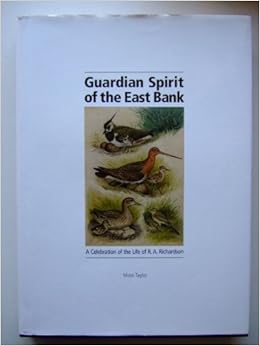
A meeting with R.A.Richardson. Artist and birdwatcher.
It is
difficult to say when I actually first started bird watching but I must have
been very young indeed. My earliest memories are stalking around the local
woods of Buxton with my elder brother David, clutching my Observers’ Book of Birds
(which I still have) and an old pair of opera glasses. As I grew older I soon
met like-minded friends and our circle of study grew wider: at first local
dales in the Peak, local moors and woodlands and then lakes and reservoirs in
neighbouring Staffordshire and Cheshire
It was in the early 70’s that I gained my
first opportunity to travel to North Norfolk ,
Cley Marshes in particular. At this point in time Cley-next-the-Sea was the
centre of the universe for us bird watchers, and here we were; as we entered the
village the sun glinted off the cluster of flint cottages. After a well earned
meal in Nancy Gull’s café and a look at the Bird Log to see ‘what’s about’, we
made for the marsh, the East Bank to be precise. Just strolling down the East
Bank I added bearded tits, marsh harrier and a ‘booming’ bittern to my life
list: this was indeed paradise. Reaching the bottom end of the bank we came
across a group of birders lounging on the grassy bank over-looking Arnold Norfolk
I was soon to realise the man in the black berry was none other than
the famous birder and artist R. A. Richardson, the illustrator of the ‘The
Pocket Guide to British Birds’, text by R.S.R. Fitter. I was very soon to find
out also, how he had earned his reputation as such a great birder. Although
R.A.R. owned a pair of binoculars, and I noticed an old brass telescope under
his jacket, he needed no such aids: bird calls (no matter how fleeting) and the
(jizz) the way the birds flew were enough for his identification skills.
Sometimes he never even opened his eyes. Yet there was nothing egotistical
about how R.A.R. used his profound knowledge, quite the contrary, he appeared
to take great pleasure in helping the lesser experienced birders, putting them
at their ease, treating everyone with great respect and equal enthusiasm.
Before the afternoon came to a close I had notched up black godwit, avocet, spoonbill,
grey plover and spotted sandpiper mainly due to R.A.R’s effortless
observations.
I
met R.A.R on one further occasion a few weeks later, this time on a leafy lane
between Salthouse Heath and the village
of Salthouse
It was a great honour to meet Richard A. Richardson
and I still look at his books with fondness, often sliding them out from the
bookshelf to leaf through his wonderful illustrations, many of which can be
found in Moss Taylor’s moving biography of R. A. Richardson,
‘Guardian Spirit of the East Bank.’
Sunday, 15 March 2015

Ghost Path.
I hear the
landscape whispering
Telling
tales of ancient footfall,
Of paths
like veins being woven
Into its
being, into its primordial fabric.
And the
landscape breathes in
The new
mapping because
It is part
of its myth.
It embraces
the new ways
Through its
bones
And holds
its secrets
Like eggs
in a nest.
Yet over
time
Many are
destined
To become
rumour
Distant
memory
To be seen
only
By moon and
star.
White
pebbles are lost in moss,
Pray flags
ragged and torn
In a haunting
wind.
The paths
of human toil
Become lost
to the landscape;
History is fragmented,
Devoured by
forgetfulness,
An ancient
mist obscures the way
And soon
old ways are destined
To become lost,
to become ghost roads.
Thursday, 5 March 2015
Sea Roads.
I wish to
follow
The
glittering water
Of the
whale road,
The swan
path above,
The
breaking watery runes
Of the
hump-backed waves
Around the
cockleshell bows.
The million
voices
Of the
shadow road birds:
Gannets,
puffins and razorbills
Singing of
past voyages
And voyages
yet to be.
I wish to
follow
The
uncharted sun road,
Plunge
westward
Into the myriad
Stains of
evening:
Tell the
tale
To the blue
men of Minch
Around an
oak spitting fire
In the
secret shadows
Of a sacred
island bothy.
Subscribe to:
Comments (Atom)